Planet Crusher: Mine & Attack
- 3.9
- Rating
- 1.00M
- Installs
- Free
- Price

 Analysis by App-foxy
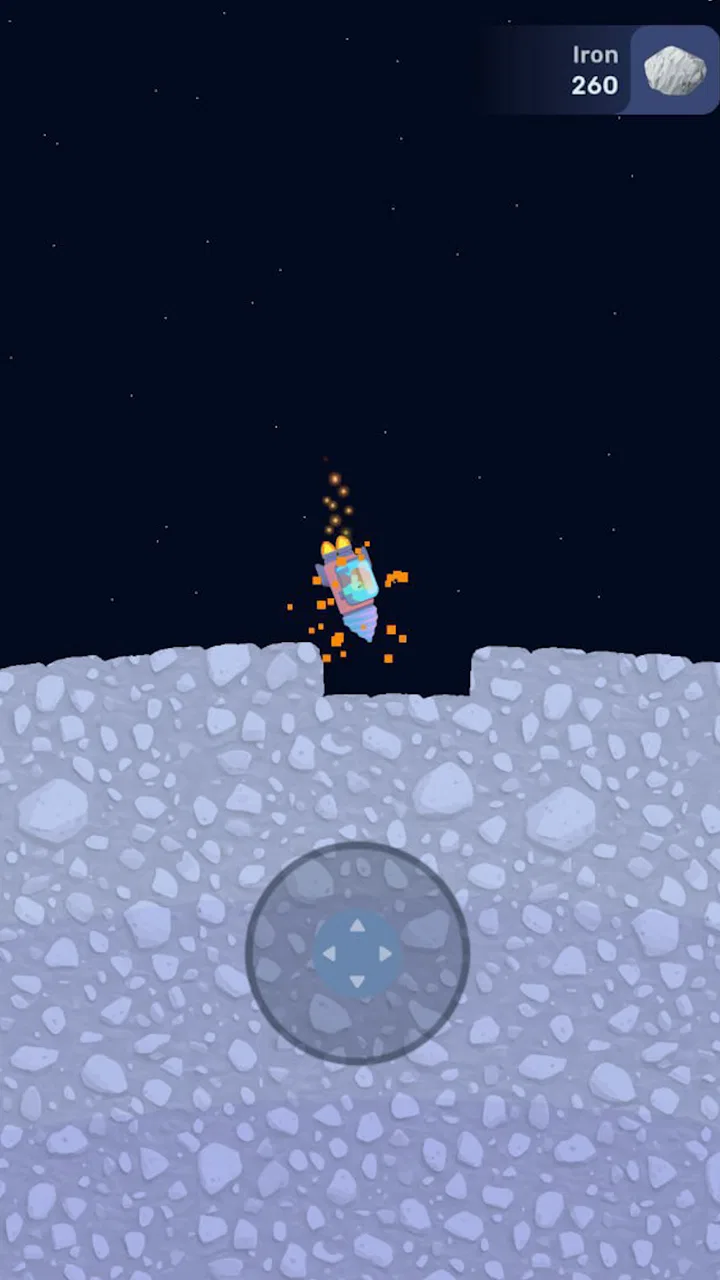
Planet Crusher: Mine & Attack is the kind of arcade game I can open with no preparation and understand almost immediately. The premise is easy to grasp: mine planets, improve a spaceship, and take part in battles as you work toward control of the galaxy. What matters in practice is how quickly that loop gets moving. I do not have to study a long story or learn a complicated control scheme before seeing progress, which makes it a natural choice for short breaks.
Developed by Gryphon Games, this free game sits in an appealing middle ground between a quick arcade distraction and a longer upgrade-driven experience. The store summary gives the broad idea, but the real question is whether the mining, improvement, and combat cycle remains enjoyable after the first few sessions. My answer is cautiously positive: it delivers immediate pleasure, although players who need constant novelty may eventually notice the repetition.
Why the first few minutes work so well
The strongest part of the opening experience is its clarity. Planet Crusher does not ask me to remember a large set of rules before I can make a useful decision. I can focus on the central rhythm of collecting value from planets, strengthening the ship, and preparing for conflict. That simple structure is especially effective on a phone, where a game often has to earn attention before a notification, conversation, or change of location interrupts it.
You May Also Like

 Blood Strike: 2.5 Anniversary
Blood Strike’s Loadouts Turn Every Drop Into a Tactical Gamble
A close look at Blood Strike’s custom loadouts: how fast access to signature weapons reshapes its battle royale rhythm, rewards preparation, and narrows the gap between fights.

 Pandora - Music & Podcasts
Pandora’s Music Is Easy to Start, but Harder to Recover
Pandora’s strength is its low-effort path from a seed to a station. Its weak spot is how much confidence it asks you to place in connection, setup, and quiet recovery.

 8 Ball Pool
 Is Built on Rivalries, Rematches, and Routine
A close look at the rivalries, rematches, shared routines, and unanswered safety questions that turn a quick pool match into a persistent mobile community.

 Samsung Music
’s Quiet Strength Is Playing What You Already Own
Its reach comes less from spectacle than from dependable access to a personal library. That simplicity is both the app’s strongest retention engine and its ceiling.

 AccuWeather: Weather Radar
AccuWeather Review: A Quick, Clear Forecast for Everyday Decisions
For everyday plans, the best forecast is the one you can understand quickly. AccuWeather makes rain timing, radar, and local conditions easy to act on, with a few trade-offs.

 Hill Climb Racing
Why Hill Climb Racing Still Turns Crashes Into One More Run
A tiny car, a bumpy hill and one more upgrade: Hill Climb Racing keeps resurfacing because its simple chaos makes every near-miss feel personal.
More From Our News Desk



I also like that the fantasy is communicated through actions rather than a heavy explanation. Mining gives the session a productive starting point, upgrades provide a reason to continue, and battles add pressure to what could otherwise become a purely passive collection loop. Even when I only have a few minutes, there is usually a clear sense of what I should try next.
The game is listed as an arcade title, and that label fits its accessible approach. It is not aimed at players searching for a deep simulation of space economics or a demanding competitive strategy game. Instead, it turns familiar space-game ideas into a compact mobile routine. That makes it approachable for newcomers, while experienced arcade players will probably appreciate the low barrier to entry more than the complexity.
One useful way to approach the opening is to resist spending every available resource as soon as it appears. I found it more satisfying to pause briefly and consider whether an improvement would make the next mining run smoother or help me handle the next confrontation. That small habit gives the upgrade system more meaning and prevents the early game from becoming a sequence of automatic taps.
A loop built for small windows of time
The session rhythm is the game’s clearest strength. A typical play period can begin with a quick check of progress, move into mining, and then shift toward upgrading or fighting. Each activity has a distinct purpose, so the game avoids feeling like one long undifferentiated stream of tapping. I can play actively when I want involvement, then step back once I have made a sensible improvement.
This works particularly well during ordinary moments that are too short for a console game but too long to ignore: waiting for a takeaway order, sitting on public transport, or taking a break between tasks. In those situations, I do not need to remember a complicated quest or reconstruct a large map. The next action is usually obvious enough that I can get started quickly.
A realistic example is a lunch break at work. I might open the game expecting to play for only a few minutes, mine until I can afford a useful change, and then test that improvement in a battle. If the break ends, the session has still delivered a complete little arc: gather, improve, act. That sense of closure is more valuable than it sounds, because many mobile games leave short sessions feeling unfinished.
The trade-off is that the same clarity can make the routine predictable. Once I understand how mining, upgrades, and battles relate to one another, the pleasure comes mainly from making progress rather than discovering a new rule. Players who enjoy optimizing a familiar loop may find that calming. Players who want surprise events, elaborate exploration, or a constantly changing challenge may find the structure too narrow.
I would also avoid treating every upgrade as equally urgent. A better short-session workflow is to choose one practical goal before starting: improve the ship enough to make mining feel more efficient, save for a stronger combat option, or simply collect enough progress to reach the next meaningful choice. Playing with a small objective makes the game feel less like resource checking and more like a series of intentional decisions.
How well it handles interruptions
Planet Crusher is at its best when I can treat it as an interruption-friendly game rather than a demanding appointment. Its basic design encourages short visits, and the straightforward loop makes it easy to return without needing a detailed memory of what happened previously. That is a major advantage over arcade games that depend on maintaining a perfect streak or remembering a fast sequence of actions.
For me, the ideal use is to play between other activities, not during a long uninterrupted evening. If a message arrives or I need to put the phone away, I do not feel that I have abandoned an elaborate plan. I can return later, look at the ship and available resources, and choose a new target. That low mental cost is one of the game’s most practical qualities.
There is still a difference between being easy to resume and being endlessly engaging. A game can be convenient to put down while offering only modest reasons to come back. Here, the upgrade path and the promise of stronger performance provide the motivation, but the pull depends on whether you enjoy incremental improvement. If you need a dramatic new objective every time you reopen a game, this may not hold your attention for long.
I recommend keeping sessions focused rather than leaving the game open as background entertainment. The mining and upgrade decisions are more enjoyable when I pay enough attention to connect cause and effect. If I rush through every available action, the game can start to feel mechanical. A little concentration makes the short bursts more rewarding without turning them into a serious time commitment.
Where replay value comes from
The replay value is tied less to a changing narrative and more to refinement. I return because I want the ship to perform better, want to handle the next battle with more confidence, or want to see how efficiently I can turn a short visit into useful progress. That is a familiar arcade motivation, but it suits the game’s compact format.
The important limitation is repetition. Mining planets, upgrading the ship, and battling others are appealing as a loop, yet the loop must carry much of the experience. If those actions already sound satisfying, the game has a good chance of becoming a dependable casual companion. If they sound like chores, there is not much else here to disguise that feeling.
My most useful replay tip is to alternate the reason for playing. One session can emphasize gathering and preparation, while the next can focus on testing the ship in battle. This prevents every visit from feeling like an identical checklist. It also helps reveal whether an upgrade is genuinely useful in action rather than merely attractive because it increases a number on the screen.
Another trade-off concerns spending. The game is free to play, but it includes optional in-app purchases ranging from $0.99 to $99.99 per item. I would approach those purchases carefully, especially because the core appeal is gradual progress. Paying may be reasonable for someone who wants to accelerate that process, but players who enjoy earning improvements through repeated short sessions should first see whether the normal loop already feels satisfying.
The broad audience is reflected in its Everyone content rating, which makes the tone approachable for families and younger players. That does not automatically mean every player will enjoy it. Someone looking for a complex space strategy game, a story-rich adventure, or a highly technical action title should choose a different kind of experience. Planet Crusher is better suited to people who value accessibility, quick decisions, and visible progress.
Performance, access, and day-to-day fit
The current version is 0.28.0, and the game requires operating system version 12 or later. That requirement is worth checking before installing, particularly if the phone is older or has not been updated recently. For compatible devices, the free entry point makes it easy to try the central loop without committing money first.
Its popularity also suggests that the format has found an audience: the game has passed one million installs, with an average rating of 4.1 from around eleven thousand ratings. I would read those figures as evidence of broad appeal rather than a promise that it will suit everyone. The more revealing question is whether you enjoy a repeatable cycle of mining, ship improvement, and combat in short bursts.
Compared with a traditional arcade game built around a single score chase, this one offers a stronger sense of continuity because progress carries into future sessions. Compared with a full space strategy game, it is much easier to enter but gives up depth and long-term planning. That comparison helps define its best audience: players who want more persistence than a quick reflex game, but less management than a serious strategy title.
It is also different from a purely idle game. The mining theme may suggest passive progress, yet the enjoyable part for me is deciding when to improve the ship and when to test it. If you want a game that runs almost entirely without attention, this is probably not the right choice. If you want a light structure that rewards occasional active involvement, it makes more sense.
Who should install it, and who should skip it
I would recommend Planet Crusher to someone who wants a space-themed arcade game for commutes, waiting rooms, and brief evening breaks. It is a good fit for players who like seeing small improvements accumulate, prefer simple goals to complicated instructions, and enjoy switching between gathering resources and taking action. It is also friendly to people who find many competitive games too intense at the start.
I would be more hesitant to recommend it to a player who needs a rich campaign, deep tactical choices, or a wide variety of activities. The central loop is the product, not merely an introduction to a much larger adventure. Repetition is therefore not a minor issue that appears only after a long time; it is part of the basic design. Whether that feels relaxing or limited depends on your expectations.
The purchase system is another reason to set a personal boundary before playing. Since individual items can reach $99.99, I would disable impulsive buying or decide in advance that I will play without spending. The free version is the sensible starting point for almost everyone. After several sessions, you will know whether the game’s rhythm is enjoyable on its own, which is more useful than buying an acceleration before understanding the experience.
For younger players, the Everyone rating makes the game easier to consider from a content perspective, but adults should still pay attention to the in-app purchase options. That is not a criticism unique to this title; it is simply practical advice for any free mobile game with optional paid items. The safest approach is to treat the purchase layer as separate from the question of whether the gameplay itself is worth your time.
My casual verdict
After spending time with it, I see Planet Crusher: Mine & Attack as a competent short-session arcade game with a clear identity. Its best quality is not complexity but convenience: I can open it, understand the immediate objective, make progress, and leave without feeling that I have missed an essential story beat. The mining-to-upgrade-to-battle rhythm gives small breaks a satisfying shape.
Its weakness is equally clear. The same loop that makes the game approachable can become repetitive, and the experience will not satisfy players who expect constant discovery. I also think the optional purchase range deserves restraint, because speeding through progression could remove part of the reason to return. The game works better when I treat improvement as the reward rather than a delay to be skipped.
My recommendation is to try the free version if you want a space-flavored game that respects short attention windows. Give it a few focused sessions instead of judging it from a single opening run. If the feeling of gradually improving a ship and choosing when to fight appeals to you, it can become an easy game to revisit. If you are searching for deep strategy or endless variety, I would look elsewhere.
In the end, Planet Crusher: Mine & Attack succeeds because it keeps its promise small and understandable. It offers a quick route from action to progress, tolerates interruptions well, and gives casual players a reason to return. I would not call it a complete space epic, and it does not need to be one. For the right player, its focused loop is exactly the point.
FAQs for Planet Crusher: Mine & Attack
01What is the primary objective of Planet Crusher: Mine & Attack?
In Planet Crusher: Mine & Attack, the main objective is to explore various planets, mine resources, and build powerful weapons. As a player, you strategically attack enemy bases while defending your own. The game combines elements of strategy and resource management to create an engaging experience.
02Is Planet Crusher: Mine & Attack free to play, and are there in-app purchases?
Yes, Planet Crusher: Mine & Attack is free to download and play. However, it does offer in-app purchases to enhance gameplay, such as additional resources, special weapons, and cosmetic upgrades. These purchases are optional, but they can provide a more enriched gaming experience.
03What are the system requirements for Planet Crusher: Mine & Attack?
For Android users, the game requires Android 8.0 (Oreo) or later, with at least 2GB of RAM. iOS users will need iOS 11.0 or later, compatible with iPhone 6s and above. Ensure you have enough storage space, as the game periodically updates with new content.
04Can I play Planet Crusher: Mine & Attack offline?
While some features of Planet Crusher: Mine & Attack can be accessed offline, a stable internet connection is recommended for the full experience. Online features include multiplayer battles, leaderboards, and regular content updates, which enhance the overall gameplay.
05How does multiplayer work in Planet Crusher: Mine & Attack?
In multiplayer mode, you can team up with friends or compete against players worldwide. You can form alliances, participate in joint missions, and engage in PvP battles. Communication and strategy are key to succeeding in multiplayer, offering a dynamic and competitive aspect to the game.
Pros
- Engaging gameplay with strategic depth.
- Vivid graphics enhance the experience.
- Frequent updates keep content fresh.
- Intuitive controls suitable for all ages.
- Multiplayer mode adds competitive fun.
Cons
- In-app purchases can be costly.
- Occasional server connectivity issues.
- High battery consumption during play.
- Ads can be frequent and intrusive.
- Requires constant internet connection.

Planet Crusher: Mine & Attack
Gallery